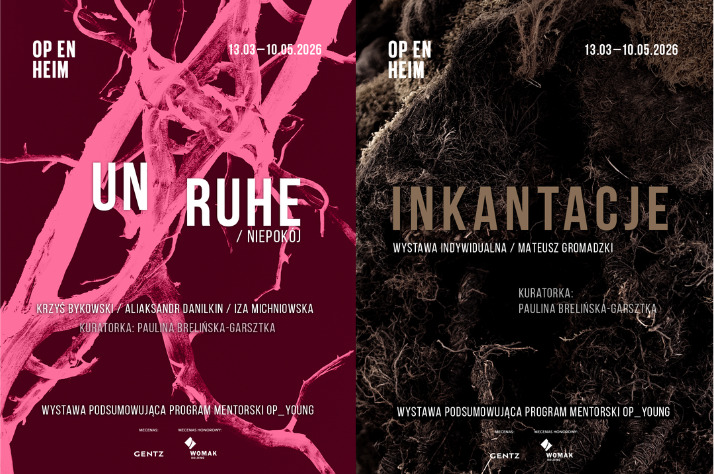
Unruhe/Unrest | Krzyś Bykowski, Aliaksandr Danilkin, Iza Michniowska
exhibition summarizing the sixth edition of the OP_YOUNG mentorship program for young artists
Incantations | Mateusz Gromadzki
Solo exhibition
Curator: Paulina Brelińska-Garsztka
Exhibitions dates: 13.03-10.05.2026
The exhibition Unruhe takes as its point of departure Fritz Lang’s film Metropolis, whose modernist vision of the future, at the moment of its premiere, functioned as a projection of twentieth-century anxieties. Lang set his film in the year 2026, portraying a world entirely subordinated to mechanisation, rigid labour hierarchies, structures of power and the radical alienation of the individual. Today, as this date is no longer a futuristic horizon, the director’s silent-film phantasm returns as a reference to experiences that are real and present.
The exhibition juxtaposes Metropolis with a sense of anxiety that is no longer a speculative anticipation of crisis or a hypothetical warning construct, but rather an experience materially inscribed in the everyday functioning of individuals and communities. It is an existential state that does not emerge at a singular point, but unfolds durationally, becoming the backdrop for thinking, acting and feeling. The eponymous Unruhe – a German term denoting restlessness, non-rest and a state of permanent imbalance – does not signify a transient tension or emotional response. Instead, it describes the temporal condition in which we live, where respite becomes increasingly unattainable while alertness and tension assume the status of normative experience. In this sense, Unruhe names the experience of living an accelerated life and the tyranny of possibilities. Significantly, the German word Unruh, referring to the balance wheel that regulates the passage of time in a clock, also resonates within this narrative. Its incessant movement establishes the rhythmic structure of the exhibition, composed of iterative artistic gestures that draw upon unsettling formal structures, natural raw materials and symbolically framed rituals.
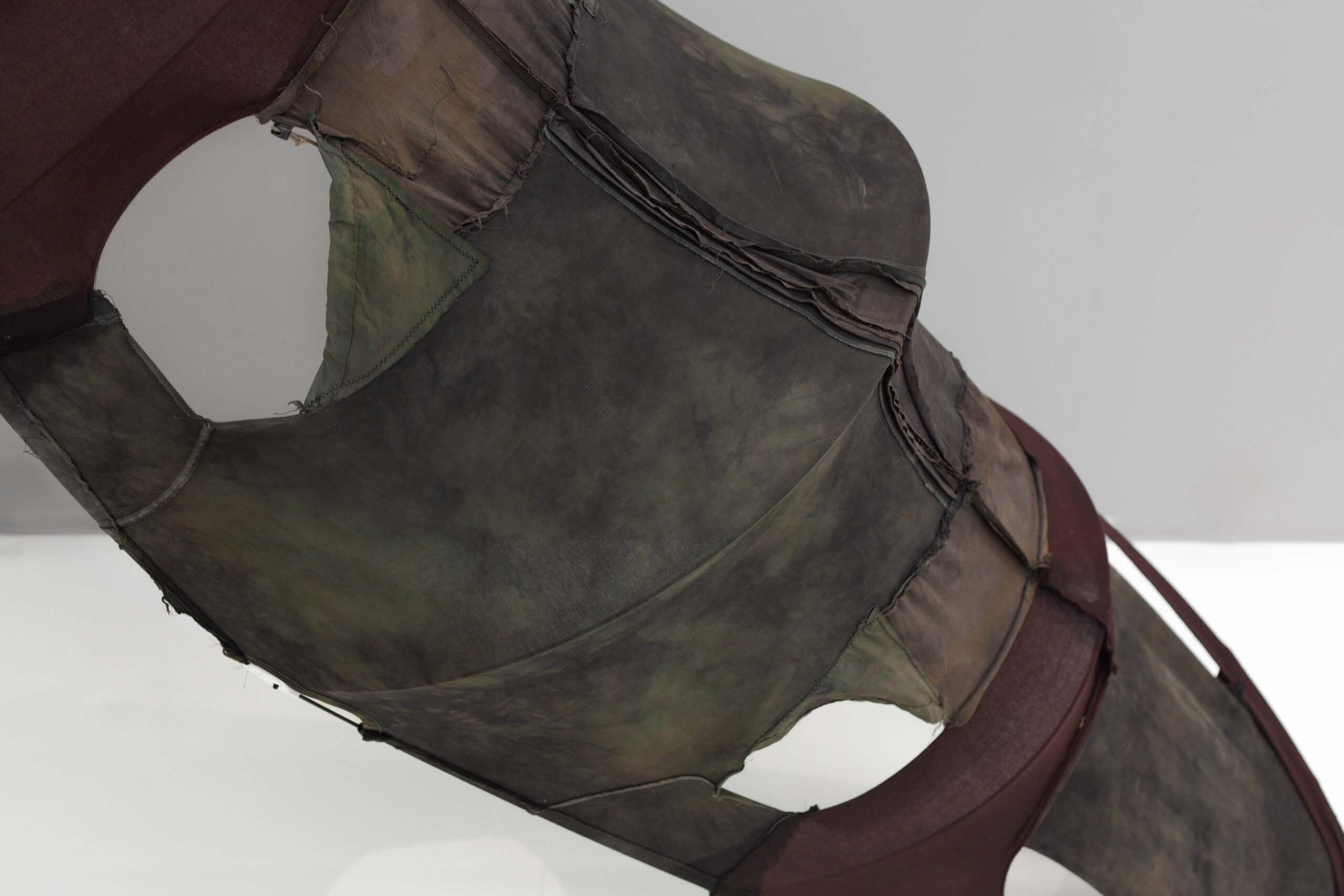
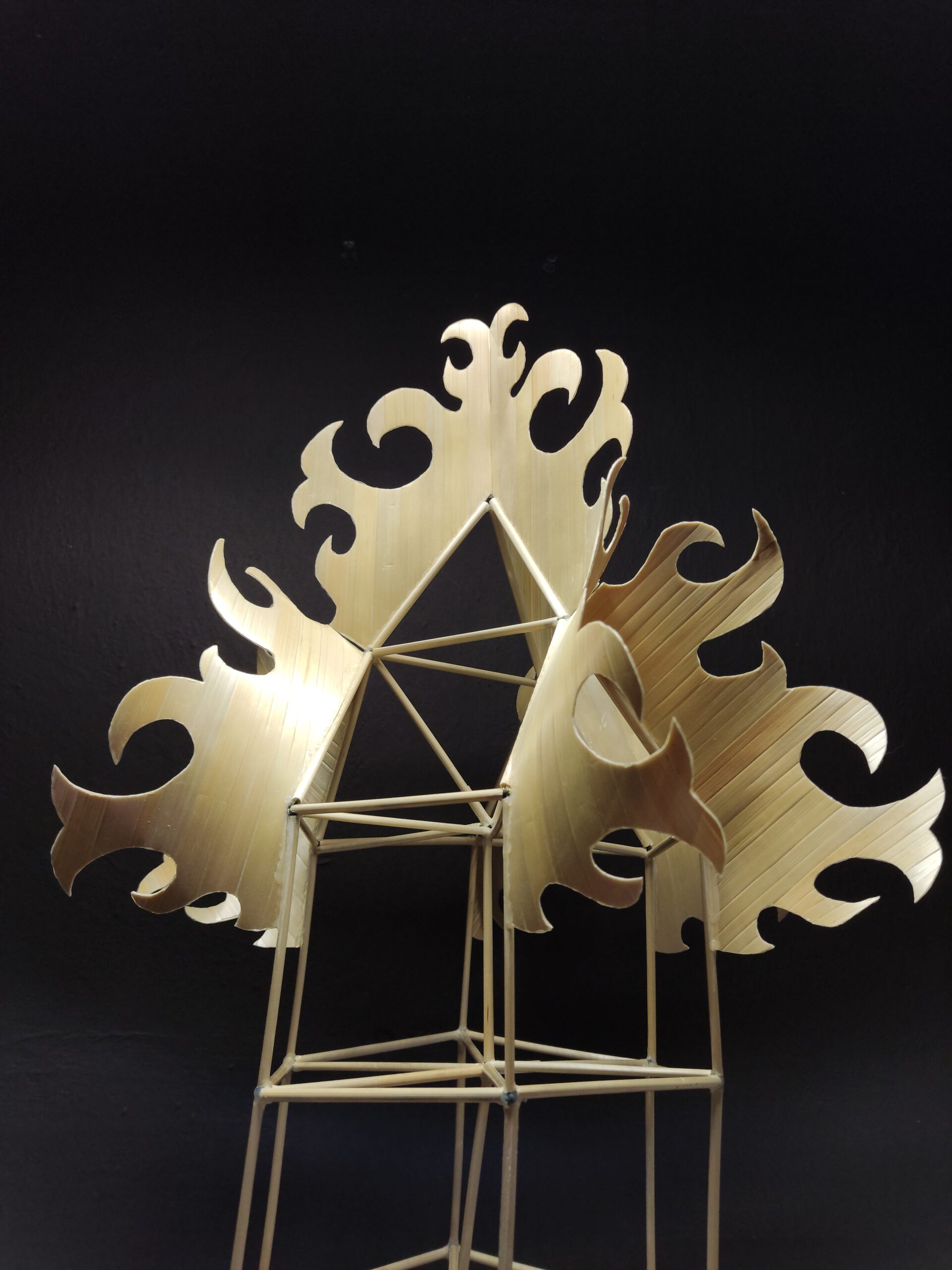
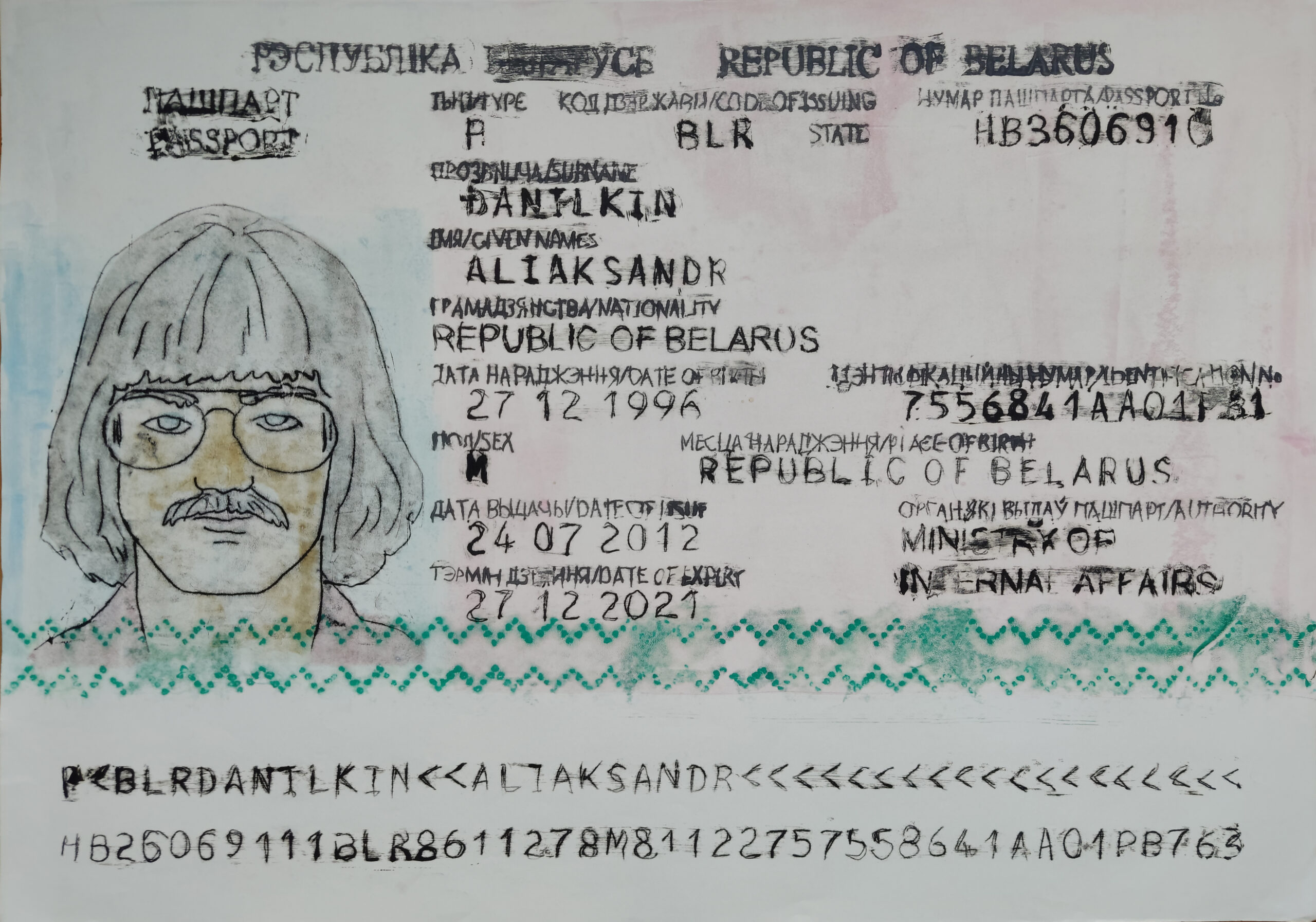
Within this framework, the human body – alongside the bodies represented in the exhibition – operates as a medium that manifests the traces of Unruhe: anxiety, fatigue and trauma. The exhibition opens from this corporeal perspective, treating it as a reflective lens through which to consider the interrelations between time, systems and human sensibility. The featured images and objects evoke a futuristic vision; however, rather than relying on literal citations from the film, the pervasive anxiety is articulated through an exhibition comprising works by three artists. Each fabric, fold, crease, ornament and sculptural protrusion generates a spatial field saturated with folk beliefs, personal experiences and inspirations variously derived from nature.
________
The exhibition Incantations arises from the artist’s personal biography, mobilised as an analytical instrument for articulating the broader condition of the contemporary subject functioning in a state of permanent tension. Drawing on magical and folk practices as a living reservoir of survival strategies, the artist situates his work as a form of intimate ritual, deeply embedded in artistic practice. The exhibition space itself functions as an incantation: a repetitive gesture aimed at influencing reality, even when its efficacy remains neither immediate nor measurable.
It is precisely within this awareness of powerlessness, coupled with the persistent necessity for action, that the exhibition’s atmosphere emerges. Composed of objects produced through the artist’s own technological processes, the works acquire the status of autonomous entities, formed from both living fragments and residual remains. In this way, art opens up a protected space for confronting the repressed. As the artist emphasises, this gesture constitutes a descent into a mental crypt in which fear, fatigue and helplessness accumulate, yet where the latent possibility of reanimation still endures.
Underlying this narrative is the experience of collective repression, interwoven with a pervasive sense of impotence. The artist invokes the image of an iceberg surfacing and coming to a standstill, while time is marked by the monotonous cadence of falling drops. This metaphor articulates a condition of suspension in which awareness of crisis does not precipitate action, but instead imposes a chronic burden upon both body and psyche. The eco-magical strategies present in the works do not aim to aestheticise catastrophe nor to “laugh through tears”; rather, they constitute an attempt to recover breath within a world devoid of simple resolutions. The transposition of magical practices into the field of contemporary art is thus framed as a gesture of self-reassurance. The artist is aware that these actions do not directly translate into reality and that their operative force resides primarily within the emotional sphere. The eponymous incantation therefore functions simultaneously as an act of enchantment and disenchantment of reality.
A central theme of the exhibition concerns the question of restoring balance. The artist investigates the area between body and mind, as well as our overburdened, shared everyday life. Incantations suggests an expanded understanding of well-being: not as an individual condition, but as one produced through interdependence. Within the exhibition, the encounter with matter – plant, animal and mineral – becomes both a measure of civilisational maturity and a speculative inquiry into the future of the species.
Through this exhibition, the artist addresses the audience with a question: Do we still speak about spirituality and ritual in the same way as previous generations understood them?
Paulina Brelińska-Garsztka